

10 Most Poetic Sci-Fi Movies of All Time, Ranked
Sci-fi is often defined by spectacle and technology: spaceships, cosmic mysteries, dystopian futures. The subgenre of hard sci-fi takes this to the extreme, focusing on technical details and scientific accuracy. But there’s another side to science fiction, too. Softer, more philosophical kinds of sci-fi are less interested in the mechanics of teleportation or the biology of aliens and more focused on the human condition and how it intersects with novel inventions and scenarios. These poetic sci-fi movies use science not as an endpoint but as a metaphor for ideas like memory, identity, and love. The titles below represent some of the most meditative and lyrical movies the genre has to offer, from Metropolis to Her. Quiet yet speaking volumes about human nature, these movies stand out in a genre where weighty ideas thrive when approached properly,
10
‘Under the Skin’ (2013)
Image via A24
“Is this the road?” Under the Skin is a unique blend of genre and arthouse elements, a mixture that shouldn’t work but does. Scarlett Johansson turns in an otherworldly performance as an alien creature who takes the form of a woman and drives around Scotland seducing lonely men. What happens afterward is both simple and horrifying: the men are lured into a void where their bodies are harvested. But the movie’s real story is internal. As the alien’s encounters expand, so does her awareness. Brief flickers of empathy, curiosity, and fear intrude upon her mechanical purpose. The visuals mirror her emotional states. Here, Jonathan Glazer makes the most out of negative space, long stares, extended silences, minimal dialogue, and a lean but effective score from Mica Levi. Through all this, the movie looks at humanity from the outside and finds it both terrifying and heartbreakingly fragile.
9
‘The Fountain’ (2006)
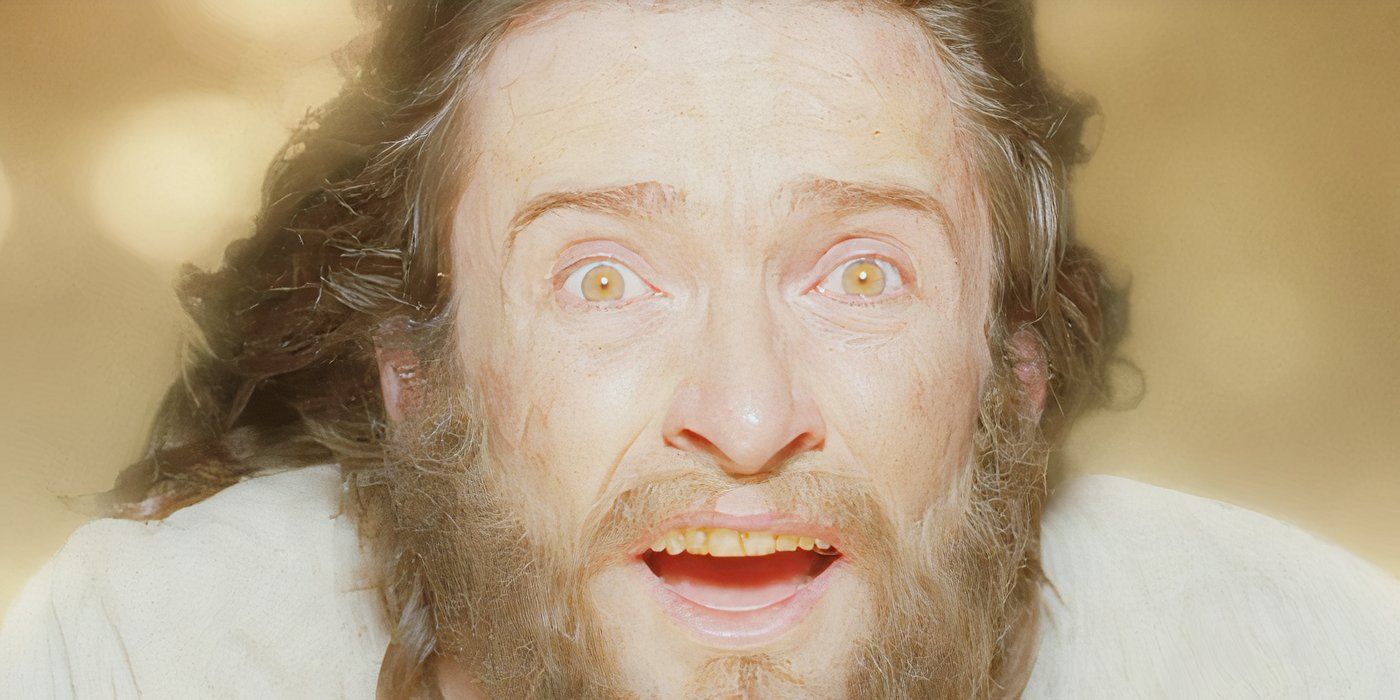
“Together we will live forever.” The Fountain was a colossal box office bomb, barely recouping half its budget, and yet it’s one of Darren Aronofsky’s most interesting misfires (even if its reach exceeds its grasp). It’s an incredibly ambitious and visually striking movie that spans three narratives across three different eras. In the present, a researcher (Hugh Jackman) tries desperately to find a cure for his wife’s (Rachel Weisz) terminal illness. In the past, a conquistador seeks the Tree of Life to save his queen. In a distant future, a lone traveler drifts through space with a dying tree, seeking transcendence. The stars play multiple roles across these storylines. Indeed, the three arcs echo one another like verses in a poem, each refracting a different facet of grief and devotion. Aronofsky then loads these narratives with truly mythic imagery, including nebulae blooming like flowers, golden light pouring through ancient temples, and bodies dissolving into stardust.
8
‘Upstream Color’ (2013)
Image via VHX
“My head is made of the same shape as yours.” Shane Carruth’s directorial debut, Primer, is one of the smartest time-travel movies ever, and he followed it up with an even more thought-provoking sophomore effort. Upstream Color concerns a woman (Amy Seimetz) whose life is hijacked by a parasitic organism that alters her perception and memory. After escaping her captor, she crosses paths with a man (Carruth) who has survived a similar ordeal, and the two form a connection. Most sci-fi movies would take this premise and get pulpy with it, perhaps involving murderous parasites or body horror. Instead, Carruth gets philosophical and psychological. Fundamentally, the parasite here is a metaphor for trauma and how identity can be rewritten. While the story is already reflective and elliptical, Carruth doubles down on this mood with the visuals. Images of pigs, water, soil, and looping rituals create a poetic ecosystem where everything is connected, and nothing is literal.
7
‘Her’ (2013)
Image via Warner Bros. Pictures
“The past is just a story we tell ourselves.” Her is one of the most prescient sci-fi movies of the 2010s, one whose speculative vision gets closer to reality with every passing day. In it, Joaquin Phoenix plays Theodore Twombly, a sensitive, introverted man who falls in love with an AI operating system named Samantha (voiced by Scarlett Johansson). What begins as companionship slowly becomes a full-fledged romance that seems to have the depth and messiness of a human relationship. Through it, the movie comments on loneliness and longing in the digital age. Her’s pastel near-future Los Angeles, with its soft reds and warm light, becomes a visual cocoon for Theodore’s emotional awakening. As Samantha evolves beyond human comprehension, the story transforms into something deeply bittersweet: a breakup between species. Her’s commentary only looks like it will grow richer with time, and it’ll probably be looked on in the future as one of the greatest sci-fi films of all time.
6
‘Blade Runner’ (1982)
The iconic image of a holographic advertisement projected on a building in Blade RunnerImage via Warner Bros. Pictures
“I’ve seen things you people wouldn’t believe.” Blade Runner is the pinnacle of sci-fi noir: rain-soaked, neon-lit, and haunted by the question of what it means to be alive. Set in a dystopian future where android “replicants” are hunted down by Blade Runners, the plot centers on Rick Deckard (Harrison Ford) as he pursues a group of escaped replicants in Los Angeles. But the heart of the movie lies in the replicants themselves, especially Roy Batty (Rutger Hauer), whose pursuit of more life leads to one of cinema’s most moving monologues. This more complex, sympathetic treatment of synths was ahead of its time, setting Blade Runner apart from most sci-fi movies of its era. It suggests that humanity is defined not by biology but by longing, mortality, and the stories we leave behind. The cinematography by Jordan Cronenweth is just as poetic as the story, pioneering a new aesthetic for the genre that would be frequently imitated but rarely surpassed.
5
‘Solaris’ (1972)
Donatas Banjonis in the middle of a flower field in Solaris.Image via Mosfilm
“We don’t want other worlds. We want mirrors.” No list of poetic sci-fi movies would be complete without Andrei Tarkovsky. His film Solaris is science fiction as spiritual inquiry. The main character is psychologist Kris Kelvin (Donatas Banionis), who is sent to a space station orbiting the mysterious planet Solaris, only to find the crew fragmented and terrified. Solaris, a living sentient ocean, materializes the deepest memories of those aboard, including Kelvin’s long-dead wife (Natalya Bondarchuk), who appears as a living, breathing replica. The conceit of a trip into space becomes a vehicle to explore grief and remembrance. Tarkovsky is less interested in technology and aliens than in the human soul. With Solaris, he asks whether memory is a blessing or a trap, and whether love can survive when it becomes indistinguishable from sorrow. His storytelling here would go on to be hugely influential, with everyone from Salman Rushdie to Christopher Nolan citing Solaris as an inspiration.
4
‘Stalker’ (1979)
Men standing in a strange room in the Andrei Tarkovsky film ‘Stalker’ (1979)Image via Mosfilm
“Let everything be as it should be. That’s all.” Another Tarkovsky masterwork, Stalker is a metaphysical journey into a forbidden landscape known as the Zone, a place rumored to fulfill one’s deepest desires. A guide called the Stalker (Alexander Kaidanovsky) leads a writer (Anatoly Solonitsyn) and a scientist (Nikolai Grinko) through this shifting labyrinth of ruins, puddles, abandoned buildings, and quiet fields. The plot is deceptively simple — three men walking and talking — but the emotional and philosophical terrain is vast. What the characters discover inside the Zone is not magic but themselves: their contradictions, their failures, their unspoken wishes. It externalizes all their longing and fears. The aesthetic is fittingly slow and cryptic, embracing gentle camera movements and long takes (the movie’s average shot length is over one minute). Like Solaris, Stalker resonated with subsequent generations of sci-fi storytellers. Perhaps most of all, its influence on Annihilation is very clear.
3
‘Arrival’ (2016)
Aliens from Arrival speaking with symbolsImage via Paramount Pictures
“If you could see your whole life from start to finish, would you change things?” Denis Villeneuve has proven himself to be cinema’s current leading light when it comes to sci-fi, and Arrival is his most emotional and reflective foray into the genre. Amy Adams turns in one of the best performances of the 21st century as linguist Louise Banks, who is recruited by the U.S. military to communicate with alien visitors whose language might hold the key to global unity… or doom. As she learns their language, Louise begins experiencing memories from her future, understanding that time for the aliens is non-linear — perhaps it isn’t for humans either. Here, Villeneuve blends cosmic awe with emotional intimacy, grounding the story in one person’s experiences. The big emotional gut punch arrives in the reveal that the film’s “flashbacks” are actually glimpses of what Louise will someday choose. In other words, Arrival is a sci-fi story about the beauty of knowing pain and choosing life anyway.
2
‘2001: A Space Odyssey’ (1968)
Keir Dullea in a red spacesuit walking through well-lit space pod in 2001: A Space Odyssey.Image via Metro-Goldwyn-Mayer
“I’m sorry, Dave. I’m afraid I can’t do that.” Back in 1968, 2001: A Space Odyssey represented a giant leap for the genre. No sci-fi movie before it had been this ambitious. Here, Stanley Kubrick sets his sights on a story that spans literal millennia and charts the entire evolution of human (and nonhuman) consciousness. We go from prehistory to the space age to the far future: apes discovering tools, astronauts encountering a mysterious monolith, a mission gone wrong aboard the sentient computer HAL 9000, and finally the cosmic rebirth of humanity. The visuals were radically ahead of their time and are still striking today, almost religious in their feel. The Stargate sequence is downright hypnotic and and the final image of the Star Child continues to spark debate. All this makes 2001: A Space Odyssey one of the genre’s very best fusions of style and substance, a science fiction epic with the philosophical brain to match its technical brawn.
1
‘Metropolis’ (1927)
Image via Parufamet
“The mediator between head and hands must be the heart.” Fritz Lang’s Metropolis is cinema’s original sci-fi poem, a silent-era epic of towering skyscrapers, oppressed workers, and forbidden love that set the foundation for nearly every futuristic film that followed. The plot centers on Freder (Gustav Fröhlich), the son of the city’s ruler (Alfred Abel), who discovers the brutal conditions of the workers below and joins Maria (Brigitte Helm), a spiritual leader advocating peace. But when a mad scientist (Rudolf Klein-Rogge) creates a robotic double of Maria to incite chaos, the city descends into revolt. Visually, the film is staggering. Lang gives us machines pumping like beating hearts, crowds moving like waves, and the iconic robot design that still defines the genre. The contrasts are powerful: light and darkness, machinery and humanity, hope and oppression. Nearly a century later, Metropolis still feels urgent, strange, and mythic, and the themes still resonate.
Metropolis (1927) Poster
Metropolis
Release Date
February 6, 1927
已发布: 2025-12-13 01:30:00
来源: collider.com