

10 Movies From 1973 That Are Now Considered Classics
1973 was a good year for cinema. New Hollywood was in full force, European auteurs were in their boldest period, and genre filmmaking, from horror to crime to psychological drama, reached new, fearless heights. The result was a bevy of visionary, influential, and enduring films. With this in mind, this list looks at the movies from that year that have had the most staying power. The titles below span a range of genres and tones, but all are smart, creative, and bursting with creativity.
10
‘Day for Night’ (1973)
Image via Warner-Columbia Film
“People like me are made to love films.” François Truffaut’s Day for Night is one of the very best movies about making movies. The plot centers on the production of a fictional melodrama, where Truffaut plays Ferrand, the soft-spoken director trying to shepherd his cast and crew through a series of crises. Opposite him, Jacqueline Bisset shines as Julien Baker, the star of the production. Actors fall in and out of love, schedules derail, props fail, inspirations strike, and the boundary between life and art dissolves entirely. Through all this, the movie captures the messy, human comedy behind the camera, where every catastrophe becomes part of the creative process. Truffaut blends documentary-like observation with narrative charm, celebrating collaboration even as he admits filmmaking is often an act of controlled madness. All this adds up to a warm yet bittersweet love letter to filmmaking itself. Exuberant, affectionate, and infinitely rewatchable.
9
‘Papillon’ (1973)
Steve McQueen and Dustin Hoffman in ragged clothing carrying sacks on their backs in Papillon.Image via Allied Artists
“I’m still here, you bastards!” Papillon is a gripping, sprawling prison-escape epic based on the memoirs of Henri Charrière (Steve McQueen), a safecracker wrongfully convicted of murder in 1930s France. Nicknamed Papillon (“butterfly”) for his tattoo, he is sent to the brutal penal colonies of French Guiana. There, he forms an unlikely friendship with the timid but resourceful forger Louis Dega (Dustin Hoffman). We follow the characters through their years of harsh imprisonment, grueling labor, solitary confinement, and repeated escape attempts. The heart of the film is the bond between two men who refuse to let a savage system crush their humanity. McQueen, in particular, turns in one of his finest performances as Papillon, imbuing the character with grit, defiance, and quiet vulnerability. He turns into a symbol for persistence and the unkillable desire for freedom, without reducing him to a cartoon. It’s a tricky balance to get right.
8
‘Cries and Whispers’ (1973)
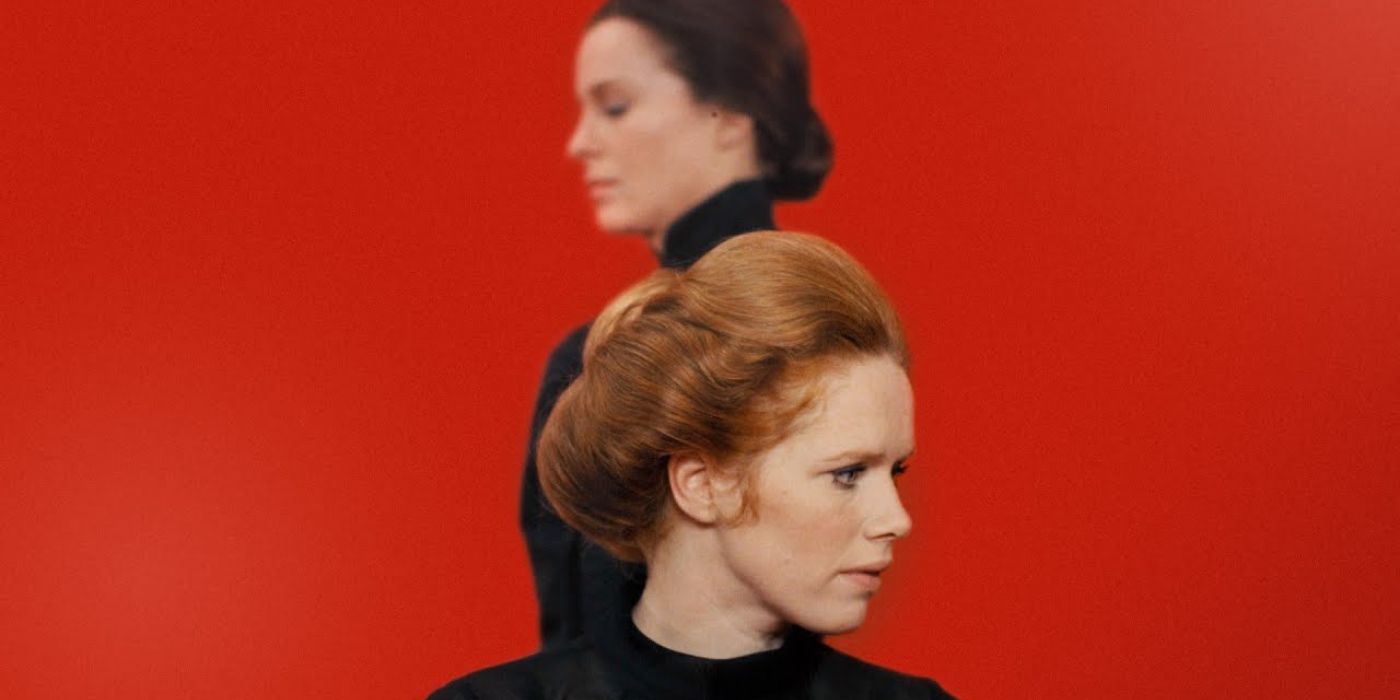
Three women in a very red room in Ingmar Bergman’s Cries and Whispers (1972)Image via SF Studios
“I feel such fear… such fear.” Ingmar Bergman’s Cries and Whispers is a devastating psychological chamber drama, not to mention one of the director’s most visually radical projects. It unfolds in a remote 19th-century mansion where three sisters reunite as Agnes lies dying from a painful illness. Maria (Liv Ullmann) and Karin (Ingrid Thulin), emotionally distant and consumed by their own failures, struggle to provide comfort, while the family’s servant Anna (Kari Sylwan) proves the only source of genuine compassion. Through these characters, the always thoughtful Bergman examines sibling resentment, repressed desire, womanhood, and the human need for solace in the face of mortality. The aesthetics complement the themes perfectly. In particular, the movie’s haunting red color palette evokes the interior of the human body, a metaphor for psychological wounds and spiritual anguish. Cinematographer Sven Nykvist won that year’s Oscar for his efforts.
7
‘Serpico’ (1973)
Al Pacino as Frank Serpico atop a building looking back at something off-camera in SerpicoImage via Paramount Pictures
“The reality is that we do not wash our own laundry — it just gets dirtier.” In this one, Al Pacino embodies the ’70s anti-authoritarian spirit as NYPD officer Frank Serpico, whose idealistic commitment to justice is shattered when he discovers widespread bribery and abuse within the department. Refusing to participate, Serpico becomes an outcast among his fellow officers and is eventually targeted for his honesty. His story remains the definitive whistleblower drama, a gritty, fact-based portrait of a man standing alone against institutional corruption. Here, Sidney Lumet explores the psychological and physical toll of one man’s moral courage, building toward a haunting finale that leaves the question of victory painfully ambiguous. The director’s documentary-style realism and Pacino’s electrifying performance make Serpico a pillar of 1970s cinema, a decade defined by cynicism, disillusionment, and heroes trapped inside broken systems. Of all the movies on this list, it perhaps best expresses 1973’s dominant mood.
6
‘Badlands’ (1973)
Martin Sheen walking across an empty plain during sunset in Terrence Malick’s BadlandsImage via Warner Bros.
“He was the most trigger-happy person I ever met.” Terrence Malick’s Badlands is an ethereal, haunting take on the American crime spree, loosely inspired by the real-life Starkweather-Fugate murders. It’s like an infinitely more elliptical and ambiguous Bonnie and Clyde. The story revolves around Kit (Martin Sheen), a charismatic but sociopathic young drifter, and Holly (Sissy Spacek), a bored teenage girl who joins him on the run after he murders her father. The film charts their journey across the Midwest, a string of killings set against serene, dreamlike landscapes. Holly narrates the events with eerie detachment, creating a chilling contrast between violence and innocence. In the process, Malick transforms a brutal true story into a lyrical meditation on youth, alienation, and the myths of American freedom. This was his directorial debut, and yet his storytelling is utterly assured. It would be the first of many masterpieces.
5
‘The Spirit of the Beehive’ (1973)
Image via Bocaccio Distribución
“I saw the monster… he wasn’t bad.” The Spirit of the Beehive is a lyrical, quietly powerful movie about childhood. Set in rural Spain just after the Civil War, it centers on young Ana (Anna Torrent), who becomes obsessed with the movie Frankenstein after watching it in her village. Convinced the monster is real, she begins exploring abandoned farmhouses and the surrounding countryside, projecting her fears and desires onto the shadows she encounters. Her older sister Isabel (Isabel Tellería) mischievously fuels these fantasies, while their parents remain emotionally distant. The plot is simple, but the film operates on a deeper, allegorical level. It builds its sparse elements it a poetic reflection on trauma, political repression, imagination, and the resilience of a child’s mind. This comes through in the visuals. The luminous cinematography turns the Castilian landscape into a dreamscape. For all these reasons, The Spirit of the Beehive is held in very high regard in its native Spain.
4
‘Don’t Look Now’ (1973)
Donald Sutherland as John Baxter holding a child in a red coat while screaming in Don’t Look NowImage via British Lion Film Corporation
“Nothing is what it seems.” Nicolas Roeg’s Don’t Look Now is a masterpiece of psychological horror; fractured, uncanny, and emotionally overwhelming. Donald Sutherland and Julie Christie lead the cast as John and Laura Baxter, a married couple grieving the accidental drowning of their young daughter. They travel to Venice, where John works on restoring a decaying church. There, they encounter two elderly sisters, one of whom claims to be psychic and insists their daughter is reaching out to them. As John begins seeing a mysterious figure in a red coat, the boundaries between premonition and reality blur. From here, Roeg hits us with disorienting edits, striking symbolism, and a labyrinthine sense of space, turning Venice into a watery grave of grief and buried fears. The shocking final twist has entered cinema legend. Once divisive, Don’t Look Now is now considered one of the greatest horror films ever made.
3
‘The Long Goodbye’ (1973)
Elliott Gould in a suit smoking a cigarette at the beach while waves splash behind him in The Long Goodbye.Image via United Artists
“It’s okay with me.” Robert Altman’s The Long Goodbye reimagines Raymond Chandler’s iconic detective Philip Marlowe for the alienated, sun-bleached Los Angeles of the 1970s. While the plot loosely follows Chandler’s novel, the director turns it into a commentary on Hollywood, masculinity, and the death of old-fashioned honor. Elliot Gould plays Marlowe as a shambling, mumbling, chain-smoking oddball who stumbles into a murder mystery involving a missing novelist, a femme fatale, and corrupt institutions. Essentially, the movie blends noir tropes with Altman’s signature looseness, creating a version of Marlowe both affectionate and subversive. Surrounded by liars and opportunists, the character becomes the last honest man in a world that has stopped believing in the concept. In this sense, and with its hazy, melancholy mood, The Long Goodbye is the ur-text of stoner noir, its DNA living on in the likes of Inherent Vice.
2
‘Mean Streets’ (1973)
Charlie and Tony lean against a bar and smile in Mean Streets.Image via Warner Bros.
“You don’t pay for your sins in church. You do it in the streets.” A raw, electrifying portrait of young men trapped in cycles of violence, guilt, and loyalty, Mean Streets was Martin Scorsese’s first real crime masterpiece. Harvey Keitel is Charlie, a small-time hood in Manhattan’s Little Italy trying to balance his Catholic conscience with his criminal lifestyle. Complicating everything is his friendship with Johnny Boy (Robert De Niro), a reckless, self-destructive troublemaker whose debts and temper spiral out of control. The plot is loose, more about character and environment than a traditional narrative, capturing a world where men dream big but live small. The storytelling is just as vibrant and energetic as the characters. Marty’s kinetic style, all handheld cameras, intimate close-ups, and rock needle drops, revolutionized the crime genre. All in all, Mean Streets launched both him and De Niro into legend and remains one of the key works of 1970s American cinema.
1
‘The Exorcist’ (1973)
Image via Warner Bros.
“The power of Christ compels you!” The Exorcist arrived in 1973 like a thunderbolt, bringing horror to new levels of critical respect and massively reshaping the genre in its wake. The plot is world-famous by now: 12-year-old Regan (Linda Blair) begins exhibiting violent, inexplicable behavior. As doctors fail to diagnose her condition, her mother turns to Father Karras (Jason Miller), a priest grappling with his own crises of faith, and Father Merrin (Max von Sydow), a seasoned exorcist. But the demonic force they confront threatens to overwhelm them. The film builds dread through atmosphere, sound design, and a slow escalation of the uncanny, melding religious terror and psychological realism. The setpieces are fantastically scary, like the spider walk, the 360 head rotations, and, of course, that scene with the crucifix. Almost 50 years later, the movie still feels modern and potent, a true classic.
The Exorcist
Release Date
December 26, 1973
Runtime
122 minutes
已发布: 2025-12-13 22:00:00
来源: collider.com