

9 Greatest Movies That Open With the Main Character Dying, Ranked
Death is only the beginning. At least that’s the case for a number of films that start their narratives off with the death of their main characters. It’s certainly one way to get an audience’s attention, and whether it leads to a film that uses flashbacks as a retrospective of that character’s life, a thriller where the runtime has become a ticking clock towards inevitable doom, or even a comedy set exclusively in their afterlife, it’s an effective plot device. It’s one that hasn’t become as overused as other narrative tricks, and the examples of films where the lead character shuffles off the mortal coil at the very start aren’t ubiquitous, but many are absolute classics. Some of these films are often in the conversation for the greatest films ever made, and even those that aren’t are often considered some of the best within their respective genres. Even though it goes without saying, and most of these movies make their intentions clear right up front, this list is going deep into some spoiler territory, and anyone who continues reading does so at their own peril. With that business taken care of, it’s time to begin at the end with the greatest movies that open with the main character dying.
9
‘Defending Your Life’ (1991)
Albert Brooks wearing a white robe in Defending Your LifeImage via Warner Bros.
About as comedic as a character death as a film has ever started with, Defending Your Life kicks off with Albert Brooks dying after his distracted driving brings him bumper to bumper with a rather large truck. From there, Brooks, who also wrote and directed this delightful fantasy rom-com, is brought into a sector of the afterlife where the recently deceased have their former lives judged by a court of higher beings who decide whether they themselves get to ascend to the next level of existence or get sent back down to Earth to try again in a new life. Defending Your Life finds Brooks pulling a perfect balance between whimsical and neurotic, with a non-denominational vision of the afterlife that is paradisiacal yet deprecating. As Brooks is forced to face facts about a life he lived in fear and regret, he also meets another soul in waiting, played by Meryl Streep, who awakens in him the lust for life he never had while he was still drawing breath. Few films have made death seem as such a delightful confection as Brooks does here, and it all starts with a lighthearted head-on collision.
8
‘Heaven Can Wait’ (1978)
Warren Beatty as Joe Pendleton talking to James Mason as Mr. Jordan in Heaven Can WaitImage via Paramount Pictures
Maybe it’s humanity’s innate fear of what lies beyond the grave or just a shared morbid sense of humor, but there’s more than one film that deals with death in a tongue-in-cheek manner. That’s how Heaven Can Wait, a screwball sports comedy starring Warren Beatty, who also co-directed the film with Buck Henry, handles the afterlife. Beatty plays Joe, a football star mistakenly declared dead by his guardian angel, who plucks him out of his mortal body a few seconds before what was to be a near-miss car accident. Now stuck in limbo, with his body cremated, Joe is given a new body in the form of a recently deceased millionaire, and he attempts to piece his former life back together. Heaven Can Wait is based on the play of the same name by Harry Segall, which had been adapted to film once before, inspired a number of similarly themed movies, and eventually led to the less successful Chris Rock vehicle Down to Earth. Beatty’s version is the best known and most beloved, thanks to a light touch in its execution and its screenplay, which was co-written by comedy maven Elaine May. It’s a dead funny throwback to classic comedies with a killer cast including Dyan Cannon, Charles Grodin and Jack Warden.
7
‘The Crow’ (1994)
Brandon Lee in The Crow (1994)Image via Dimension Films
The Crow, a gothic superhero film based on James O’Barr’s graphic novel, is as synonymous with death as any film could be. Not only does it begin with the death of its lead character, Eric Draven, and his wife, but it was also on the set of this film that star Brandon Lee was tragically killed in a horrific shooting accident. Just as Draven’s spirit is resurrected to avenge his and his wife’s deaths, Lee’s hangs over the entire film, a somber epitaph to a man taken far too soon and a career that was only just beginning. Even if The Crow didn’t have the weight of its leading man’s death adding gravity to its plot, it is still an incredibly effective and surprisingly moving ’90s action thriller with a unique gothic style that would influence many future films. Director Alex Proyas and cinematographer Darius Wolski’s rain-soaked vision of Detroit as hell-on-earth is enhanced by the grimy production design of Alex McDowell. The massive city sets make the city look like the most decayed and desolate version of Gotham City from Tim Burton’s Batman movies. The Crow is a visually bleak cult classic that should be watched in remembrance of the bright light of Brandon Lee that shines at its center.
6
‘The Killers’ (1946)
Image via Universal Pictures
It’s not unusual for film noir protagonists to meet a violent end, but most of them get to tell their stories before getting pumped full of lead. That’s no such luck for Burt Lancaster’s protagonist in the classic crime thriller The Killers, based on the short story by Ernest Hemingway. Not long after the opening credits have rolled, he’s already accepting his fate at the business end of two hit men’s pistols. The rest of his story is then told via flashback as an insurance investigator searches for the beneficiary of his life insurance policy. The Killers is a classic pulp noir that expands greatly on the Hemingway source material, which only covers the fateful opening moments of the film up to the death of its protagonist. From there, the film spins a wide web of convolution, as is par for the course in classic noirs, but it’s opening with the titular killers that really sets the audience on edge. Those two killers have also inspired a bevy of noir characters, from Jules and Vincent in Pulp Fiction to Ray and Ken from In Bruges.
5
‘Laura’ (1944)
Marc McPherson (Dana Andrews) staring longingly up at a portrait of Laura Hunt (Gene Tierney) on her wall in LauraImage via 20th Century Studios
It may be a technicality to include Otto Preminger’s noir masterpiece, Laura, since the titular character’s death is only mentioned in the opening narration and never actually seen, but it’s hard to ignore it. Following Dana Andrews’ dogged detective as he investigates the supposed death of Gene Tierney’s successful woman about town. His investigation is complicated by a cavalcade of suspicious characters, including Laura herself, when she turns up alive and well. Preminger’s adaptation of Vera Caspary’s crime novel has plenty of twists and turns in its plot, which mirrors its contentious production. Preminger had been hired to develop the film against the wishes of studio head Darryl F. Zanuck, who had a longstanding feud with the director. Zanuck allowed Preminger to produce the film, but had him replaced by another director, Rouben Mamoulian, who proved an ill fit for the production and was quickly fired, allowing Preminger to step in. The studio head would also force Preminger to film an alternate ending that tested poorly in screenings, leading to the original ending being reinstated. It’s a classic Hollywood backstory to one of the best classic noirs ever made.
4
‘Grave of the Fireflies’ (1988)
Grave of the Fireflies is an extremely hard film to watch. It opens with young Seita dying alone in a train station, and the movie only becomes more profoundly heartwrenching from there, with the full context of the plot, which loops back around to the beginning, making those first moments hit even harder. Based on the short story by Akiyuki Nosaka, who wrote it based on the tragedies he experienced as a result of the bombing of Kobe during World War 2, the film follows Seita and his young sister Setsuko, who are orphaned by the bombing and find themselves struggling to survive as the war begins to wind down. A film focused entirely on the civilian casualties of war, Grave of the Fireflies is the most emotionally impactful film from director Isao Takahata, who brought his childhood experiences from World War 2 into it. It isn’t a film that is as imminently rewatchable as some of the others from the esteemed Studio Ghibli, for obvious reasons, but it is one that is absolutely unforgettable from its first frame to its last.
3
‘Lawrence of Arabia’ (1962)
T.S. Lawrence (Peter O’Toole) looking at a gold trinket in Lawrence of ArabiaImage via Columbia Pictures
The opening of David Lean’s epic masterpiece Lawrence of Arabia is far from the most memorable sequence of a film filled with them, showing the fateful motorcycle crash that took T.E. Lawrence’s life in 1935. That life, or a portion thereof, is then dramatized in one of the greatest films ever made, with Peter O’Toole giving a career-defining performance, and Lean, along with cinematographer Freddie Young, capturing some of the most majestic visuals in Super Panavision. Focusing on Lawrence’s exploits as a lieutenant during the First World War and as part of the Great Arab Revolt, the movie is filled with expansive landscapes and awe-inspiring battle sequences. Winning seven Academy Awards and widely hailed by critics, audiences and a number of prominent filmmakers who count it among their favorites, Lawrence of Arabia is still a staggering filmic achievement that looks just as impressive now over sixty years later as it did in 1962.
2
‘Citizen Kane’ (1941)
Image via RKO Radio Pictures
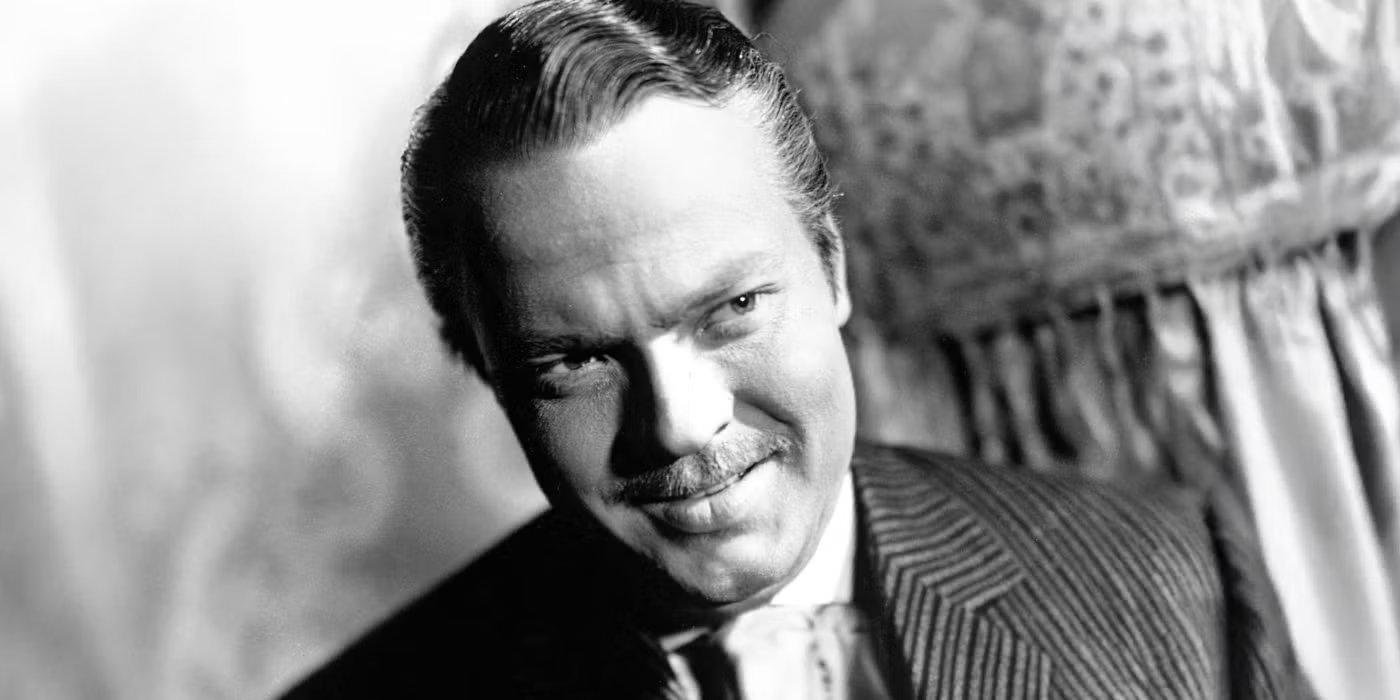
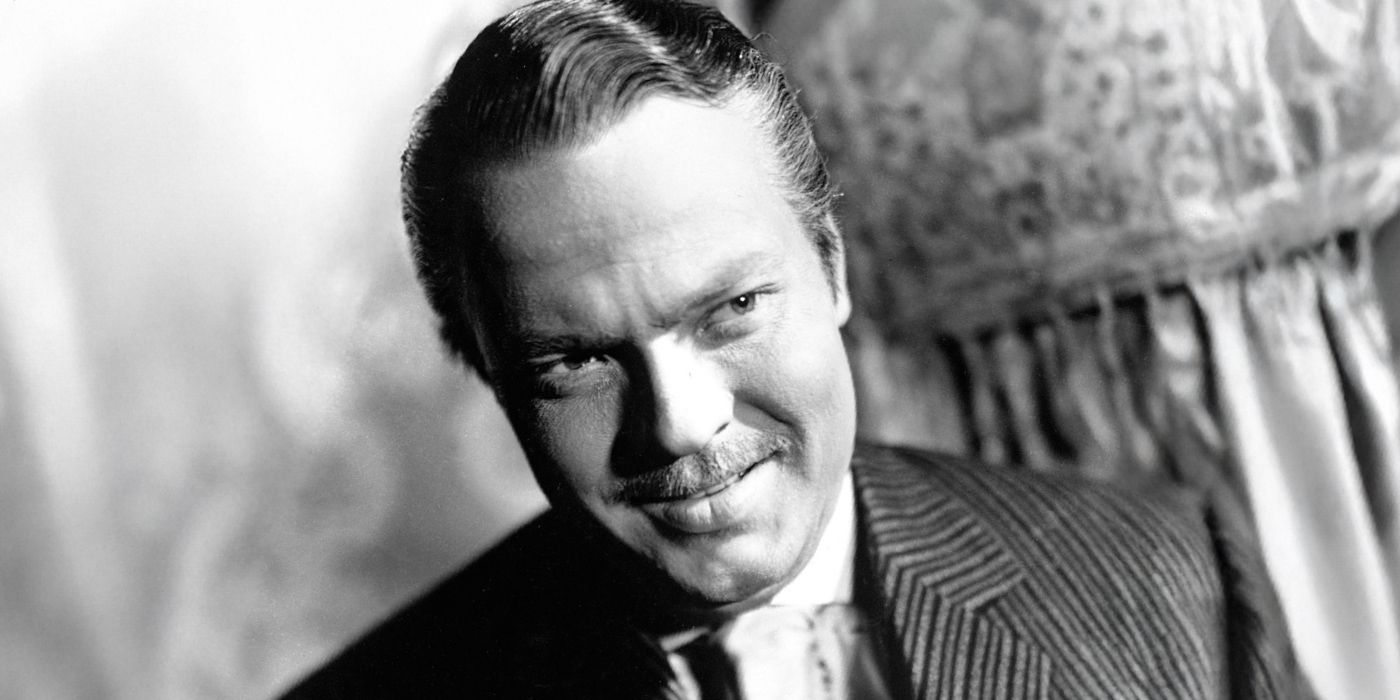
Rosebud. With that single word, uttered on the deathbed of newspaper magnate Charles Foster Kane, so begins Orson Welles’ towering masterpiece that is often cited as the greatest film ever made, Citizen Kane. Whether or not anyone actually considers the film the greatest of all time, it’s impossible to ignore its achievements and staggering impact on filmmaking that has rippled through generations of directors. Beginning at the end of the life of its main character, the film charts Kane’s rise to power and his fall from grace. Inspired by a variety of powerful figures, most notably William Randolph Hearst, the film is an exploration of truth, wealth and influence that remains ever relevant in the era of Donald Trump, who has stated it to be his favorite. Even more relevant are the storytelling and filmmaking techniques that Welles employed in the film, including extensive use of flashbacks, conflicting narrators and deep focus cinematography. Citizen Kane is an undeniable masterpiece, and it begins with one of the most iconic deaths in film history.
1
‘Sunset Boulevard’ (1950)
William Holden as Joe Gillis floating in a poolImage via Paramount Pictures
If there’s any film that begins with a more iconic death of its main character than Citizen Kane, it’s Billy Wilder’s darkly comic noir Sunset Boulevard, which opens with William Holden narrating his life, all while floating dead in a pool. It’s a stark beginning, a biting film about the fleeting nature of fame in Hollywood. Holden plays a struggling screenwriter who finds himself drawn into the sad world of former silent film star Norma Desmond, played by former silent film star Gloria Swanson, who lives in her decrepit mansion on Sunset Boulevard with only her butler (Erich von Stroheim) to keep her company. An insightful, spiteful meta-commentary on Hollywood that was decades ahead of its time, Sunset Boulevard has one of the all-time best scripts and two pitch-perfect performances by Holden and, especially, Swanson, who commands the screen with an old-school theatricality that dances between hilarity and tragedy with every step. It’s a cynical film that plays all its sour notes to perfection, beginning with its iconic first scene of a waterlogged corpse of a screenwriter.
已发布: 2025-12-14 00:38:00
来源: collider.com


