A ‘Demon,’ a Stabbing, and an Ayahuasca Trip Gone Wrong
I
n the early morning hours of Oct. 5, 2024, Julio Rivera, wearing white, loose yoga pants and no shirt, dashed out of an Airbnb on a South Florida residential street. Stefan León, a 32-year-old bearded man with a shaved head, followed in hot pursuit. Rivera, 67, had been stabbed five times, including to his chest. León was clothed, his garments smeared with Rivera’s blood. “Kill me now,” León bellowed at the peak of a psychedelic-induced psychosis around 2:30 a.m. “I’m going to kill you, motherfucker,” he babbled. “You are going to die forever.”
Neighbors were awoken by the sound of Rivera banging on the door of a bungalow. He was “covered in blood and begging for help,” a police detective later reported after reviewing CCTV. León dragged Rivera into the yard as he yelled for the younger man to stop. The sound of blows could be heard outside of the camera’s view, and Rivera says he and León struggled for another 10 minutes before the police arrived.
Authorities swiftly ascertained León, the shorter yet stronger man, was the assailant. León kicked at one of the three officers and declared he was “a demon, God Himself, and Hitler,” according to the police report. “They told him to stand up,” Rivera says. “He said, ‘I’m gonna kill you all.’” Police tased León in the back and handcuffed him. Two of the officers then applied “life-saving measures” to Rivera, a separate officer’s report reads. Paramedics and more officers arrived soon after. León was arrested and charged with attempted murder.
The gruesome incident highlights what many at the forefront of the nascent psychedelic industry have long been reluctant to admit: In the Amazon, where it originated, the use of ayahuasca has not always been associated with ‘love and light.’ As these ceremonies increasingly take place across the world, with many experiencing significant benefits, more and more people are suffering adverse effects — and though few are as extreme as León, his near-fatal attack on Rivera underlines just how far out of control a person can be rendered by the potion.
Editor’s picks
MORE THAN FOUR MILLION people across the world have taken ayahuasca, including one and a half million people in the U.S., according to estimates made by the non-profit International Center for Ethnobotanical Education, Research and Service (ICEERS), which researches psychedelic plants. “Since the turn of the millenia, ayahuasca has grown in popularity,” says Dr. Simon Ruffell, a former U.K. National Health Service (NHS) psychiatrist who has been training for six years to be an ayahuasca facilitator in an Amazonian tradition. (It can take up to 15 years of study to become an expert.) “It’s become quite easy to find ayahuasca on every continent around the world and there are increasing numbers of people flying over to the Amazon rainforest to drink ayahuasca,” he says. “Many people have been getting a lot of healing.”
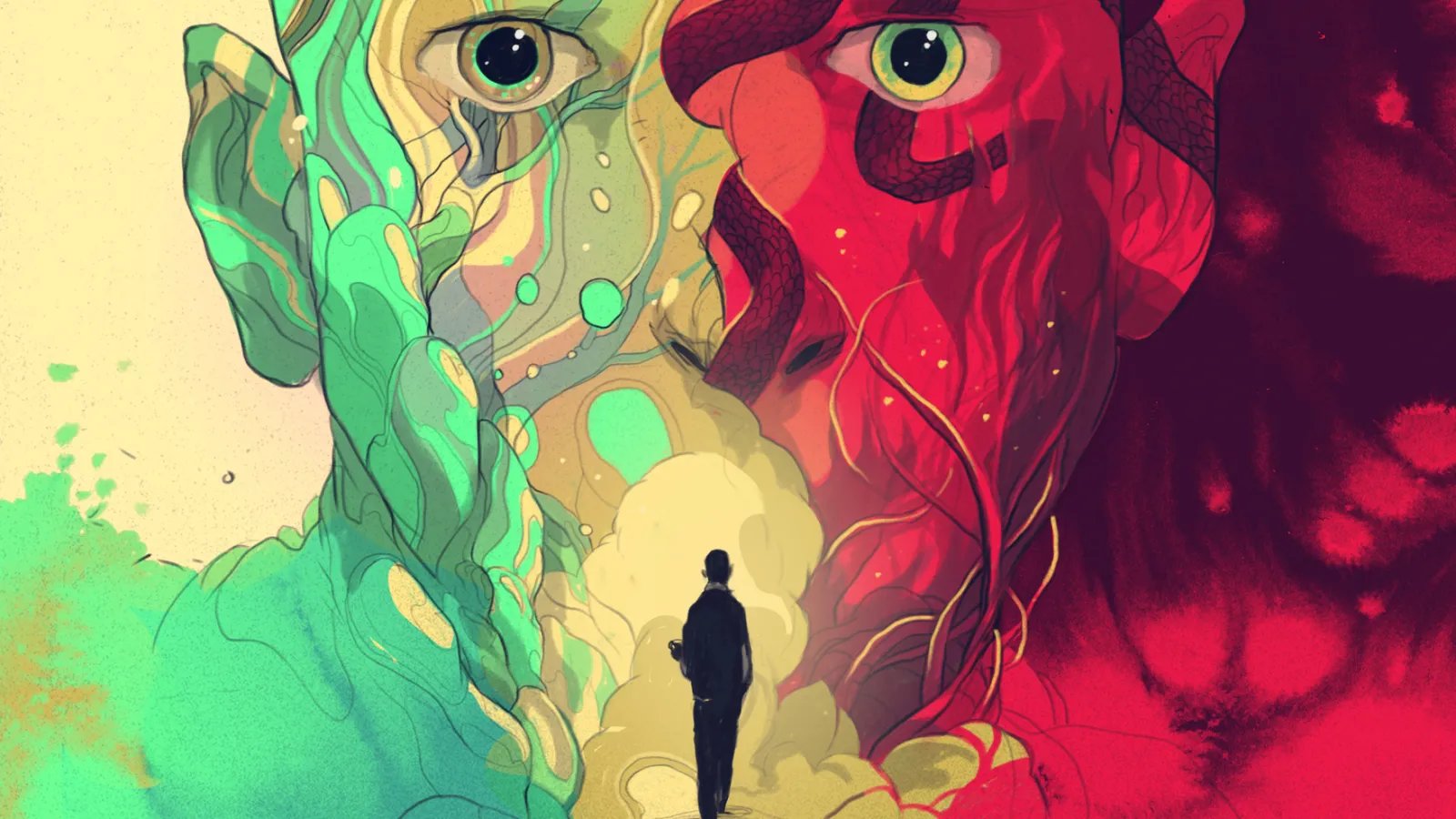
Across the psychedelic research community, however, it is widely acknowledged people can have visions of entities, aliens, and mythical beings while tripping, especially on ayahuasca, a brew of a vine containing the powerful psychedelic DMT, along with a shrub that activates its effects. These visions are often considered benign, or even beneficial, but a 2022 paper on adverse ayahuasca events reported that around 15 percent of almost 8,000 respondents to a survey experienced a harmful connection with a “spirit world” during ceremonies with the brew. A core shamanic belief is that psychedelics can make people more receptive to both harmful and helpful spirits.
Indigenous leaders attest to how some “spiritual doctors” — the preferred phrase for shaman — are not practicing healing, but brujeria, or witchcraft. “Both healing and brujeria use the same tools,” explains Jheison Romulo Sinuiri Ochavano, president of the Oni Xobo Intercultural Organization, which works to preserve indigenous Shipibo culture. These individuals are known to perform specialized treatments, in a manner not unlike certain Christian exorcisms, on patients and participants, while they are under the influence of ayahuasca. “We have to prepare before taking out the yoshin (inner darkness),” says Sinuiri. “It’s really a high level of responsibility and expertise required on the part of the practitioner to be able to take out their demons.” But, he adds, it is “part of the healing work.”
Related Content
“It’s really a high level of expertise required to be able to take out their demons”
Ayahuasca can create distress within those who consume it, and the presiding “maestro” — another word for these spiritual doctors — needs to be prepared, explains Walter López, spokesperson for the Shipibo-Konibo Healers Association. “It’s true that sorcery and attacks exist but you need training and preparation to know how to deal with those things and protect yourself and others,” he says.
Swiss chemist Albert Hofmann, the inventor of LSD, reported having an encounter with a negative entity in his world-first 1943 acid trip. “A demon had invaded me, had taken possession of my body, mind, and soul,” he later recalled. Clinical psychiatrist and DMT researcher Dr. Rick Strassman has spoken of pausing research in the mid-1990s after participants reported negative encounters with entities. “How can we tell if these beings are for us or against us?” he told a conference in 2015. “When opening yourself to spiritual worlds, it’s not all love and light. It’s important to know how to protect yourself.”
But other psychedelic scientists, along with the entire scientific establishment, dismiss the idea. Can demons really inhabit a person? “Of course not,” says psychedelic neuroscientist Zeus Tipado, a PhD candidate at Maastricht University in the Netherlands. “They’re self-created.” When people take ayahuasca, they are forced into deep, introspective reflection — potentially against the backdrop of dark imagery — which “could result in the personification of demons,” Tipado says, but is simply the mind making sense of the seemingly senseless.
Rivera, however, believes in entities in a more literal sense. He and León began talking “about astral parasites and these subconscious entities that most of us have,” at some point in 2022. León “was not happy,” Rivera says. Rivera believed that a subconscious entity — which he describes as a bundle of negative energy — was fuelling León’s unhappiness, and that psychology coaching techniques in which he would direct him, under the influence of ayahuasca, could help purge whatever was affecting him. León says that his intentions were focused on emotional healing related to early childhood trauma, self-reflection, and personal growth.
“I was his coach, his chef, his friend, and his shaman for three days,” Rivera says. Then everything went wrong.
RIVERA AND LEON FIRST MET in 2016, when León, then 24, became a member of an ayahuasca center that Rivera co-founded in Miami that year, operating it in a grey area citing a 2006 Supreme Court ruling allowing a Brazilian ayahuasca church a religious exemption. “I glimpsed what I was looking for,” León wrote in a 2024 blog post titled “Flirting with Death.” “I died and met God. My search for meaning led me to my Self … Ayahuasca gave me a way forward.” León had long struggled with his mental health, he wrote, and was on a spiritual journey to improve his fatalistic mindset. In one ayahuasca ceremony, he recalled, he learned of darkness in a past life. “Ayahuasca showed me that my dream represented a real event from another timeline,” he wrote. “Crashing my vehicle and dying in suicidal rage.”
In 2016, Rivera — a thickset, six-foot-tall man who speaks almost poetically — had just completed his 15-year ayahuasca apprenticeship with the renowned Peruvian psychedelic maestro Don Jose Campos. (Campos would later make headlines after he was arrested in 2022 and held for just under a year in a Mexican prison for traveling with ayahuasca, before he was acquitted in a landmark trial.) By 2019, Rivera was drafting material for two books about ayahuasca he would later self-publish, in which he outlined his far-out theory on how “subpersonalities and entities control our lives.” He would go on to oversee some 250 ayahuasca ceremonies after drinking it around 500 times himself over 28 years.
León says that he did so 30 times with Rivera personally, and another 20 times with other facilitators, prior to their private retreat. During León’s years-long journey, he started gaining some success as a neo-expressionist visual artist known as Champzy. He created raw, expressive, and sometimes eerie pieces on giant canvases, exploring themes of anti-human trafficking activism, while clearly etching the path of his own subconscious exploration.
Julio Rivera spent 15 years studying how to lead ayahuasca journeys.
By 2022, León was working part-time as a “personal evolution” life coach, focused on helping people find spiritual awakening and reclaim their lives. Friends have said that his “heart-conscious wisdom” had helped them, but behind the scenes he continued his labored search for inner peace.
Meanwhile, Rivera had begun to realize that even intensive work with ayahuasca may not provide the prolonged relief some people are looking for, even if they think it is helping them. Studies suggest ayahuasca can have positive mental health effects and reduce depression and PTSD. Many who drink ayahuasca report experiencing astonishing closed-eye visions in which they meet a mother-nature goddess, while others have incredible mental health transformations.
But plenty of people tell of being left dazed and destabilized by ayahuasca ceremonies and struggling to return to their previous lives; some make sudden life changes that only bring distress and further trauma. Fitness influencer Connor Murphy drank ayahuasca in a ceremony in Joshua Tree in 2020 and became destabilized after going from, he claimed, “a spiritually frustrated YouTuber to a guru with complete experiential understanding of the universe.” After reportedly consuming ayahuasca regularly for a year afterwards, he ended up in a mental health facility, according to a friend, declaring himself God, and posting his social security number and bank details on Instagram, “to show a nonattachment to materialism.”
RIVERA WAS A STRAIGHT-A STUDENT at his all-boys Catholic school in Puerto Rico. “I was a nerd,” he recalls. But once he was accepted into college in 1975, he decided to celebrate with his friends and finally smoke a joint. “It blew my mind,” he says. The high altered his perception of reality and he began viewing things more fluidly. He got into astrology and was soon experimenting with mushrooms, LSD, quaaludes, “the ups, the downs, the sideways.”
Despite being a “bit of a druggie,” Rivera excelled at the University of Puerto Rico in statistics and mathematics, before going to the University of Miami, where he obtained his masters degree in management science. But he always felt there was something missing. “I was not finding it in these drugs,” he says. Rivera put a pause on substances. He got married and started working in banking. He made a lot of money, drove sports cars, and played golf at an exclusive club.
One Sunday in 1988, Rivera came across an article about ayahuasca. There was little Western research on the subject back then, but Rivera soon discovered that shamans who drink ayahuasca claim they can gain insights into the past, present, and future. His interest piqued, he told himself, “I’ve got to do this. It’s the next one.”
It was not until the globe-trotting Peruvian maestro Campos came to Puerto Rico a decade later, however, that he did so, and it transported him to uncharted frontiers of his mind. “I was very materialistic, money, all that shit, and everything changed,” he says. After just one ceremony, Rivera applied to be the maestro’s apprentice. He was soon helping arrange his retreats. Starting in 2002, he made regular trips to Peru to study how to serve ayahuasca himself. “I was doing it secretly because I didn’t want my bank to know about it,” he says. “I could be fired for doing drugs; nobody understood what ayahuasca was.”
But in 2008, following an almost three-decade career in banking, Rivera retired. “I had the call from mother ayahuasca to serve medicine to others,” he recalls. “She invited me and I accepted.”
IN 205, A 26-YEAR-OLD CAMBRIDGE-educated British engineer named Unais Gomes was seeking to alleviate his malaise in the Amazon, where he drank a double-dose of ayahuasca and went into a mysterious, deranged frenzy. He began strangling a fellow retreat attendee, Joshua Stevens, a 29-year-old Canadian. “It’s time to get your demons out brother,” Gomes told Stevens. “We’re going to get them out together.” As they brawled, Gomes picked up a knife. “All that was going through my head was … if this guy gets this knife, he’s going to kill one of us,” Stevens said. “It was either kill or be killed.” He stabbed Gomes once in the stomach and, after that failed to subdue him, again in the heart, killing him in self defense. “All I could sense from him was evil,” Stevens told Dazed. “His eyes had an empty rage. He was possessed.”
Rivera knew that it is not uncommon for people to experience intense paranoia during ayahuasca ceremonies. When deemed necessary, he had previously restrained multiple people until the ayahuasca wore off and they returned to a more normal state, which could take hours. But when Rivera began planning the private retreat for León, he decided to not employ an assistant, as he usually would, since León had attended many of Rivera’s ceremonies without a hitch.
Rivera would swiftly be confronted with the consequences of his near-fatal error in the early hours of Oct. 5, when the retreat went awry after the third and final ayahuasca ceremony of the weekend. “I failed as a facilitator; I didn’t have an assistant,” says Rivera. “My relationship with him was so cool and he has done so many ceremonies. I failed to follow the rules. With these people that are out of control, three or four guys step in and we tie him down and we wait till it fades away.” Rivera learned a lesson, that adverse reactions “can happen to anyone, anytime.”
“I failed as a facilitator. I didn’t have an assistant”
The third ceremony and the therapy session which followed had been trying for León, according to Rivera. He says that he told León that an astral parasite within him was having a negative effect on his mental health. León cried and told Rivera he was at a loss for how to work what he was learning from the experience into his everyday life.
“I don’t know how I’m going to integrate this,” León said, according to Rivera, referring to the exercise of positively processing a trip after it’s over. “It’s too hard.” Rivera advised him to get some sleep. León lay down, but about 10 minutes later, Rivera says, he began screaming, “I lost!”
León grabbed his AirPods case, broke it in half, and attempted to swallow a piece of it. After several seconds, Rivera — who was sitting just a few feet away — realized what León had done and jumped on top of him to fish the object from his throat. “I had to reach deep to remove it,” Rivera recalls. “Then he looked at me with big, big eyes, and said, ‘If you do not let me die, I will kill you, and we will die.’” Soon after, he began hitting his head into the concrete floor. “Then I got scared,” says Rivera. “I said, ‘Shit this guy is totally possessed.’ I knew that I had to control him physically.”
Rivera was too busy trying to restrain León to call the cops. “This guy developed incredible, superhuman strength,” he recalls. “For 20 minutes, we fought all over the house. All the furniture was turned upside down.” Rivera tried to wrestle him into the bathroom, so there would be a door between them, but they ended up in a heap on the floor.
Rivera says he began choking León, in an attempt to make him pass out, but he feared he might actually kill him. “I released him … got up, and grabbed my phone,” he recalls. He made for the front door, but it was dark and his glasses had fallen off during the brawl. As he opened the door, León, back on his feet, let out a scream, and Rivera felt “this chopping in my chest. He was stabbing me.” He says León bellowed, “I’m killing you! Yes, it’s true!” as he plunged the knife into his body.
In rapid fire, five stabs penetrated Rivera’s chest, head, and shoulder. He was able to grab the blade with his right hand, almost severing his thumb, and toppled León, who surrendered the knife. “He laid on the ground, arms open,” says Rivera. “He wanted me to (stab) him like Dracula in his chest.”
Rivera raised the knife as if he was about to stab him, then ran out of the house and threw the knife into some bushes. “He came after me,” Rivera says. That’s when they sprawled out into the street, before León was taken into custody.
By that point, Rivera was at Delray Medical Center fighting for his life. The knife had punctured his lung. Rivera’s blood pressure was dropping; he was seeing “yellow bubbles” in his vision and on the verge of losing consciousness. A doctor realized the issue and inserted a tube to suck blood from Rivera’s lung. “The blood pressure started coming back, these people were so happy,” he says, recalling the medical staff surrounding his bed. “They were applauding and cheering.”
Once Rivera was stable, the police came to interview him, and he insisted he didn’t want to press charges. “This guy is my friend,” says Rivera, who spent four days in the hospital. “It was a demon.” Prosecutors, however, charged León with aggravated battery with a deadly weapon, as well as two counts of resisting arrest, before upgrading the main charge to attempted murder. But Rivera maintained that the charges should be dropped.
León tells Rolling Stone that his actions did not reflect his true self and that he has unqualified contrition for what he did. “This is the biggest regret of my life,” he says. “I don’t have the words to express how sorry I am to Julio for losing control and almost killing him, because he is someone that I have loved and respected for as long as I’ve known him. I feel a tremendous amount of remorse.” However, he adds, the near-tragedy would likely have been avoided if Rivera had insisted on employing an assistant, as is customary. “In hindsight, I wish we’d had additional support because it would have prevented what was almost a tragedy,” León says. “It has been traumatic for everyone involved.”
Asked whether he is ever going to do psychedelics in the foreseeable future, he says no.
ACCORDING TO TIPADO, THE NEUROSCIENTIST studying at the Maastricht University, psychedelics in the West were originally called psychomimetics since they were understood to mimic the symptoms of psychosis. “If you look at how the brain fires up after people take psychedelics, it looks very similar to people going into psychosis,” Tipado says. The peak of a psychedelic experience can therefore share similarities with psychosis; and, for people with undiagnosed underlying conditions, this can increase the severity of manic and psychotic symptoms, as the findings of a recent paper concluded. “The simple fact is that this person had a psychotic episode which almost cost the life of his facilitator,” says Tipado, who is basing his opinion on the publicly available information on the case. “It’s almost always an undiagnosed existing condition: Very rarely does something pop up and go away.”
Tipado cautions people to seriously consider the facilitator and setting when using ayahuasca. “A trip isn’t like a few beers, it can restructure your entire belief system and permanently damage you,” he says. “A person’s consciousness is a very precious thing. People should think twice before dumping ayahuasca on someone and talking about demons.”
“He laid on the ground, arms open,. He wanted me to (stab) him like Dracula in his chest”
Bia Labate, PhD, an anthropologist, ayahuasca expert, and co-founder of the non-profit Chacruna Institute, which campaigns for the decriminalization of psychedelics, says ayahuasca has helped and inspired her deeply over many years. “I have also come across problematic scenarios of use, such as cults, episodes of violence and challenging mental health outcomes,” she says. “These cases are certainly a minority, but we have to work hard to avoid any of them from ever happening.”
Rivera had to undergo treatment to remove scar tissue from his chest, but still has some remaining on his scalp. He otherwise fully recovered from his other injuries. He says he received a letter from León from the police station apologizing, and later through his lawyer. But Rivera had unanswered questions for months. “The only thing I need now is to confirm with him that he actually removed the entity,” Rivera told Rolling Stone in April. “I will know exactly when talking to him. I pray for him every night.”
León, who says it is impossible to definitively know whether any entities influenced events, was released from custody in November 2024 and remains under house arrest. Since early December, he’s been allowed to go to his art studio to paint and to the art gallery where he is a director, and was able to show his work at Miami’s Art Basel. “The last thing I want to do is to see him rot in jail,” says Rivera, who in December 2024 released a new book which he described as “the ultimate guide” to removing psychological demons on psychedelics, while also launching a $500 referral program to gain more clients for his retreats. “I didn’t have the staff around me to control the situation, and it got out of hand. I miscalculated, and I paid a high price.” Meanwhile, Rivera has been promoting his new protocol of astral parasite extraction and psilocybin- assisted experiences in Jamaica. “I’m carrying the torch,” he says. “This is the path.”
On Jan. 9, 2026, León, wearing a dark suit and a white shirt with his head bald and his beard long, pleaded guilty to three charges in exchange for the state dropping the attempted murder charge. A Palm Beach judge sentenced him to a further 10 months of house arrest as part of a five-year probationary period. León agreed to be evaluated for substance abuse disorder and not to make any social media posts “condoning use of ayahuasca or any other drugs.” Rivera also attended the hearing. “As the victim, I never stopped asking for Stefan’s freedom,” he tells Rolling Stone in a statement. “From my very first statement to police at the emergency room, I made it clear that he was not my enemy. He was (a) friend. What happened was not driven by intention or motive, and it would be deeply unjust to make him responsible for something he never meant to do.”
The spirits — if they exist at all — remain unaccountable, but Rivera says that León is now living life unencumbered by his previous strife. “He feels free now.”
已发布: 2026-01-16 16:00:00